Anxiety is a common issue in dogs, ranging from separation anxiety to fear of thunderstorms, fireworks, or new environments. Many dog owners search for safe and effective ways to calm their pets, and Xanax for dogs has become a widely discussed option.
Xanax, or Alprazolam, is a prescription medication that can help manage stress and panic in dogs, but the correct dosage is crucial for safety and effectiveness.
Dosing varies significantly depending on a dog’s weight, age, overall health, and the severity of anxiety. Giving too much can lead to serious side effects, while too little may be ineffective.
This article provides a detailed Xanax dosing chart for dogs by weight, explains how to safely administer it, highlights potential side effects, and explores alternative treatments for anxiety.
If your dog struggles with noise phobias or general stress, this guide will help you navigate safe and effective anxiety management.
What is Xanax and How Does It Work in Dogs?
Xanax, also known by its generic name Alprazolam, is a prescription medication in the benzodiazepine class. It works by acting on the central nervous system to produce a calming effect, which can help reduce anxiety, panic, and stress-related behaviors in dogs. Veterinarians may prescribe Xanax for a variety of conditions, including separation anxiety, noise phobias, car travel anxiety, or generalized nervousness.
While Xanax is widely known as a human medication, it can be safely used for dogs under strict veterinary guidance. The drug helps by enhancing the effect of gamma-aminobutyric acid (GABA), a neurotransmitter that inhibits excessive nerve activity in the brain. This leads to a reduction in anxious behaviors, such as pacing, excessive barking, destructive chewing, or hiding.
It is important to note that Xanax is not a cure for anxiety—it is a temporary aid to manage symptoms while implementing long-term solutions such as behavioral training and environmental modifications. Dosage varies depending on a dog’s weight, age, health condition, and severity of anxiety, making a proper Xanax dosing chart for dogs essential.
Although generally safe under veterinary supervision, side effects like drowsiness, loss of coordination, or paradoxical excitement can occur. Because of these risks, it is crucial not to give human Xanax without consulting a veterinarian. When used correctly, Xanax can significantly improve the quality of life for anxious dogs and their owners.
Factors Affecting Xanax Dosage in Dogs
1. Dog’s Weight:
Weight is the primary factor in dosing. Smaller dogs require lower doses, while larger dogs may need higher amounts. Administering too much to a small dog can lead to serious side effects, including excessive sedation or respiratory issues.
2. Age:
Puppies and senior dogs are more sensitive to medications. Puppies may require lower doses due to developing organs, and older dogs may have slower metabolism, increasing drug sensitivity.
3. Overall Health:
Dogs with liver, kidney, or heart problems may process Xanax differently. These conditions can affect how long the drug stays in the system and may require dosage adjustments.
4. Concurrent Medications:
Some medications can interact with Xanax, increasing sedation or causing adverse effects. Always inform your vet about any other drugs, supplements, or treatments your dog is receiving.
5. Severity of Anxiety:
A dog with mild anxiety may need only a small dose, while dogs with severe panic attacks or phobias may require higher amounts, under strict vet supervision.
6. Breed Sensitivity:
Certain breeds may be more prone to side effects or slower metabolism. Small breeds like Chihuahuas or Toy Poodles often need lower doses than larger breeds.
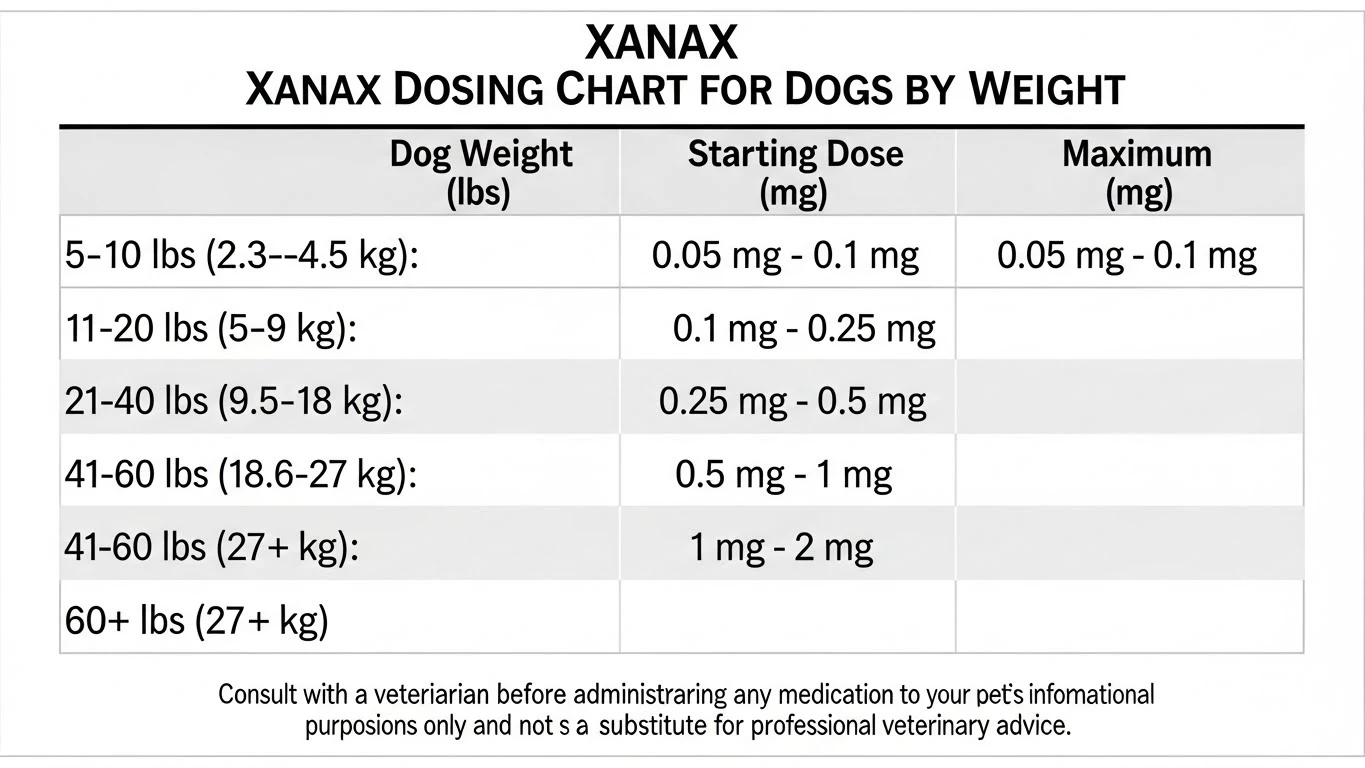
Xanax Dosage Chart for Dogs by Weight
When it comes to giving Xanax to dogs, weight is the most important factor for determining the correct dosage. Below is a general guideline often used by veterinarians. Keep in mind that these are approximate ranges; always consult your veterinarian before giving any medication.
| Dog Weight (lbs) | Typical Dose (mg) | Notes |
|---|---|---|
| 5–10 lbs | 0.25–0.5 | Start with the lower end and monitor for side effects |
| 11–20 lbs | 0.5–1 | May split into two doses per day if needed |
| 21–40 lbs | 1–2 | Adjust based on severity of anxiety and vet advice |
| 41–60 lbs | 2–3 | Watch for drowsiness or loss of coordination |
| 61–80 lbs | 3–4 | Larger doses may be needed for severe anxiety |
| 80+ lbs | 4+ | Highest range; only under strict veterinary supervision |
Important Tips:
- Always start at the lowest effective dose.
- Observe your dog for any unusual behavior or side effects during the first 24 hours.
- Doses may be split into multiple administrations depending on the dog’s needs.
- Never give human Xanax without veterinary guidance, as it can be dangerous.
- Adjustments may be necessary based on age, health condition, and concurrent medications.
This chart serves as a practical reference for dog owners but is not a substitute for professional advice. Proper dosing ensures that your dog receives effective anxiety relief while minimizing risks of sedation, confusion, or other adverse effects.
How to Administer Xanax to Dogs Safely
Giving Xanax to dogs requires careful handling to ensure safety and effectiveness. The first step is always consulting a veterinarian, who will determine the appropriate dose based on your dog’s weight, health, and anxiety level.
Forms of Xanax:
- Tablets: Most common form; easy to administer with food or treats.
- Liquid: Sometimes prescribed for small dogs or those who have difficulty swallowing pills.
Administration Tips:
- Hide in treats or food: Use a pill pocket or small piece of cheese to mask the tablet’s taste.
- Divide doses if needed: Some dogs benefit from splitting the daily dose into two smaller doses to maintain calmness.
- Monitor closely: Watch for signs of over-sedation, confusion, or unusual behavior after the first dose.
Timing:
- Administer at the same time each day or as directed by your veterinarian.
- For acute anxiety events (thunderstorms, fireworks), give the dose 30–60 minutes beforehand as recommended by the vet.
Safety Precautions:
- Never give human Xanax without veterinary supervision.
- Store medication out of reach of pets and children.
- Avoid combining with alcohol or other sedatives.
- If a dose is missed, follow the vet’s instructions rather than doubling the next dose.
By following these guidelines, you can help your dog remain calm and comfortable while minimizing risks. Proper administration ensures that Xanax works effectively without causing harm or unnecessary stress.
Potential Side Effects of Xanax in Dogs
While Xanax can be highly effective for managing anxiety in dogs, it is important to be aware of potential side effects. Most dogs tolerate the medication well, especially when given at the correct dose, but some may experience mild or serious reactions.
Common Side Effects:
- Drowsiness or sedation: Dogs may appear unusually sleepy or lethargic after taking Xanax.
- Loss of coordination: Mild unsteadiness or wobbling can occur, especially during the first dose.
- Increased appetite or mild stomach upset: Some dogs may eat more or have minor digestive changes.
Less Common or Serious Side Effects:
- Confusion or disorientation: Dogs may seem dazed or less responsive.
- Paradoxical excitement: Rarely, some dogs may become more agitated or hyperactive instead of calm.
- Respiratory depression: High doses or sensitivity can cause slowed breathing, which is a medical emergency.
- Excessive sedation or collapse: Indicates possible overdose or adverse reaction.
What to Do:
- Monitor your dog closely during the first few doses.
- Contact your veterinarian immediately if your dog shows unusual behavior, severe lethargy, vomiting, or difficulty breathing.
- Adjustments to dosage may be necessary based on your dog’s response.
Understanding potential side effects helps you keep your dog safe while using Xanax for anxiety. By following the veterinarian’s instructions and monitoring your pet carefully, you can minimize risks while ensuring your dog receives the calming benefits of the medication.
Long-Term Use and Safety Considerations
While Xanax can be effective for short-term anxiety relief in dogs, long-term use requires careful monitoring and veterinary guidance. Prolonged use may be necessary for dogs with chronic anxiety, but it carries potential risks that owners should understand.
Dependency and Tolerance:
- Dogs can develop a tolerance to Xanax over time, meaning the same dose may become less effective.
- Long-term use can also lead to dependency, so it is important not to stop medication abruptly, as this may trigger withdrawal symptoms such as agitation, shaking, or increased anxiety.
Regular Veterinary Monitoring:
- Vets often recommend periodic check-ups for dogs on long-term Xanax.
- Blood tests may be advised to monitor liver and kidney function, ensuring the medication is not causing harm.
Behavioral Support:
- Medication alone is rarely a permanent solution.
- Combining Xanax with behavioral therapy, training, and environmental enrichment provides the best long-term results.
- Gradual desensitization to anxiety triggers helps reduce reliance on medication.
Adjusting Dosages Over Time:
- A veterinarian may adjust doses based on weight changes, health status, or the dog’s response.
- Occasional “drug holidays” or lower doses may be recommended to prevent tolerance.
Safety Precautions:
- Keep all medications out of reach of pets and children.
- Never combine Xanax with other sedatives or alcohol.
By carefully monitoring your dog and combining medication with behavioral interventions, long-term Xanax use can remain both safe and effective, improving quality of life for anxious dogs while minimizing risks.
Alternatives to Xanax for Dog Anxiety
While Xanax is effective for many dogs, some pet owners prefer non-medication options or want to complement treatment with safer alternatives. There are several approaches to reducing anxiety in dogs that don’t rely solely on pharmaceuticals.
Behavioral Training:
- Desensitization and counter-conditioning are proven methods to reduce anxiety triggers.
- Gradually exposing your dog to fearful situations in a controlled way helps them build confidence.
- Reward-based training reinforces calm behavior, reducing reliance on medication over time.
Environmental Adjustments:
- Create a safe, quiet space for your dog during stressful events, such as thunderstorms or fireworks.
- Use calming sounds, white noise, or music designed for pets to reduce stress.
- Pheromone diffusers can mimic comforting scents and have a calming effect on anxious dogs.
Natural Supplements:
- Some pet owners use CBD oil, L-theanine, or calming chews.
- These can help mild anxiety and are often safer for long-term use than prescription medications.
- Always check with your vet before introducing supplements, as some can interact with other medications.
Routine and Exercise:
- Regular walks and playtime help burn off nervous energy and maintain a balanced mood.
- Structured routines make dogs feel secure and reduce anxiety triggers.
Combining these strategies with occasional Xanax use under veterinary guidance often provides the best results. While medication can manage acute symptoms, long-term solutions typically involve behavioral support, environmental enrichment, and natural calming aids, ensuring your dog remains happy, confident, and anxiety-free.
FAQs:
1. Can I give my dog human Xanax?
- While Xanax is primarily a human medication, it can be prescribed safely for dogs under veterinary guidance. Never give Xanax without consulting a vet, as doses differ between humans and dogs.
2. How long does Xanax last in dogs?
- Effects typically begin within 30–60 minutes and can last 4–6 hours, depending on the dog’s size, metabolism, and dosage.
3. Is Xanax addictive for dogs?
- Long-term use can lead to tolerance or dependence, which is why veterinarians monitor dogs closely and avoid abrupt discontinuation.
4. What if my dog accidentally takes too much Xanax?
- Overdose can be dangerous, causing excessive sedation, loss of coordination, vomiting, or slowed breathing. Contact your veterinarian immediately or go to an emergency clinic.
5. Can puppies take Xanax?
- Puppies are more sensitive to medications, and dosing must be carefully calculated by a veterinarian. Xanax is generally reserved for older puppies or adult dogs unless advised otherwise.
6. Can Xanax be used for acute anxiety events?
- Yes, under vet guidance, Xanax can be administered before known stressors, such as fireworks, thunderstorms, or vet visits.
7. Are there alternatives to Xanax for anxiety?
- Yes. Behavioral training, calming supplements, environmental modifications, and routine exercise can all reduce anxiety, sometimes eliminating the need for medication.
Conclusion
Managing anxiety in dogs requires a careful balance of medication, monitoring, and behavioral support.
Xanax for dogs can be an effective tool to reduce stress, panic, and fear, but it must always be used under veterinary supervision. Proper dosing, guided by a dog’s weight, age, health, and anxiety severity, is critical to ensure safety and effectiveness.
While Xanax can provide fast relief during acute anxiety events, long-term management often involves behavioral training, environmental adjustments, and natural calming alternatives.
Observing your dog for side effects, adjusting doses as needed, and consulting your veterinarian regularly will help maintain both safety and efficacy.
By combining proper medication use with supportive strategies, owners can help their dogs lead calmer, happier lives, reducing stress for both pets and families.
Using a Xanax dosing chart for dogs by weight ensures that anxiety relief is safe, accurate, and tailored to your dog’s needs.

I’m Robert Silva, a quotes expert at Quotesfuel.com — delivering powerful words and daily inspiration to keep your spirit fueled!