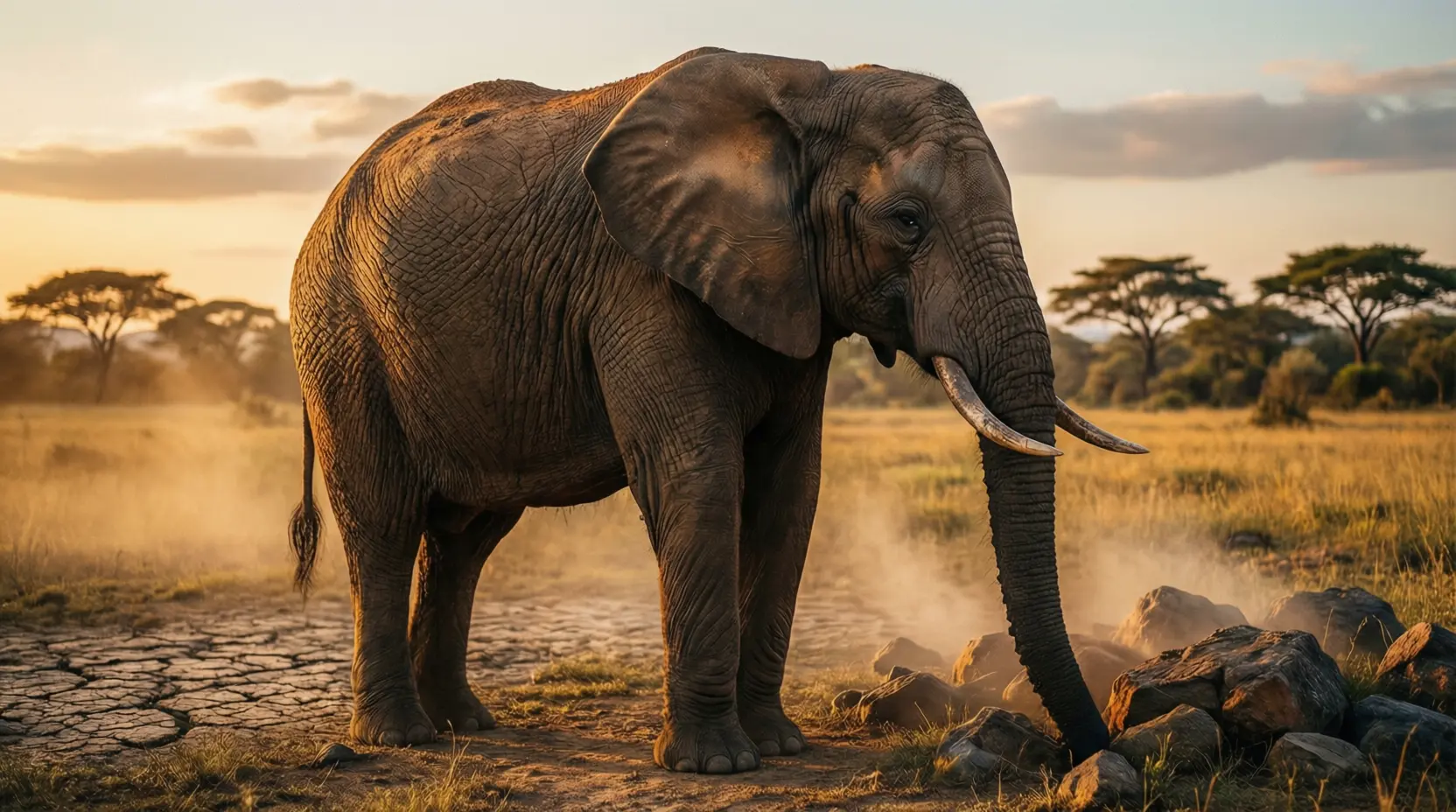
Elephants are among the most fascinating animals on Earth, known not only for their intelligence and social behavior but also for their enormous size.
One of the most common questions people ask about these gentle giants is: how much does an elephant weigh? The weight of an elephant is truly remarkable, making it the largest land animal currently living on the planet.
From the moment they are born, elephants carry an impressive amount of mass that continues to increase as they grow into adulthood.
This immense weight plays a crucial role in shaping their anatomy, movement, diet, and habitat. Understanding elephant weight also helps scientists, conservationists, and wildlife experts monitor their health and protect their populations in the wild.
In this article, we will explore the average weight of an elephant, differences between species, how weight changes with age, and why this incredible size is essential for their survival. By the end, you’ll have a deeper appreciation for just how extraordinary elephants truly are.
What Is the Average Weight of an Elephant?
The average weight of an elephant varies depending on species, age, and gender, but it is always impressive by any standard. On average, an adult elephant weighs between 2,700 and 6,000 kilograms (about 3 to 6.5 tons). This enormous body mass makes elephants the heaviest land animals on Earth. Male elephants, known as bulls, are typically much heavier than females, often weighing up to 30 percent more when fully grown.
At birth, elephant calves already weigh a staggering 90 to 120 kilograms (200–265 pounds). This makes them heavier than many adult animals from other species. As elephants grow, they continue to gain weight steadily throughout their lives, especially during their first 20 to 25 years. Growth slows as they reach adulthood, but some elephants may continue to gain weight gradually with age.
Different species also show noticeable differences in average weight. African elephants are generally larger and heavier than Asian elephants, with African bush elephants being the largest of all. Asian elephants, while still massive, tend to be more compact in build and lighter overall.
An elephant’s weight is closely tied to its lifestyle and biology. Their massive bones, thick muscles, and large internal organs all contribute to their overall body mass. This weight allows elephants to survive in diverse environments, travel long distances in search of food and water, and defend themselves from predators. Understanding the average weight of an elephant provides a foundation for exploring the many factors that influence their size and strength.
Weight by Elephant Species
Elephant weight varies significantly across different species, reflecting differences in genetics, habitat, and physical structure. Today, there are three recognized species of elephants, each with its own distinct size and weight characteristics.
The African bush elephant is the largest and heaviest of all elephant species. Adult males typically weigh between 4,500 and 6,000 kilograms, while females are slightly lighter, averaging 2,700 to 3,600 kilograms. Their massive bodies, large ears, and long tusks contribute to their extraordinary weight, allowing them to dominate the savanna landscapes they inhabit.
The African forest elephant is smaller and more compact than its bush-dwelling relative. Males usually weigh between 2,000 and 4,000 kilograms, making them significantly lighter than African bush elephants. Their reduced size helps them navigate dense forest environments more efficiently, where agility is more important than sheer mass.
The Asian elephant is generally smaller than both African species. Adult males typically weigh between 3,000 and 5,000 kilograms, while females average 2,000 to 3,000 kilograms. Asian elephants have a more rounded body shape, smaller ears, and shorter tusks, all of which influence their overall weight.
These differences in weight are not random. Each species has evolved to suit its environment, balancing size, strength, and mobility. Understanding species-specific weight variations highlights how elephants have adapted to diverse ecosystems while maintaining their status as the world’s largest land mammals.
Elephant Weight by Age and Life Stage
An elephant’s weight changes dramatically throughout its lifetime, with each life stage marked by significant growth and development. From birth to old age, elephants follow one of the longest growth cycles of any land animal.
Newborn elephant calves are already impressively large, weighing between 90 and 120 kilograms at birth. Despite their size, calves rely heavily on their mothers for nourishment and protection. During the first few years of life, elephants experience rapid weight gain as they consume nutrient-rich milk along with increasing amounts of vegetation.
As elephants enter the juvenile stage, their growth continues steadily. Young elephants can gain several hundred kilograms each year as their bones strengthen and muscles develop. By adolescence, males begin to grow faster than females, a difference that becomes more pronounced over time.
In the sub-adult stage, typically between 10 and 20 years of age, elephants experience significant increases in body mass. Males, in particular, begin developing the large frames that will eventually define their adult size. Females also continue to gain weight, though at a slower and more consistent rate.
Fully grown adult elephants reach their maximum weight between 25 and 40 years of age. At this stage, males are at their heaviest, while females maintain a stable weight suited for reproduction and social roles. In old age, some elephants may lose weight due to reduced mobility or dental wear, which affects feeding. These lifelong changes highlight how closely elephant weight is tied to age, health, and survival.
Factors That Influence an Elephant’s Weight
An elephant’s weight is not determined by species and age alone; several environmental and biological factors also play a crucial role. One of the most important influences is diet and nutrition. Elephants consume massive amounts of food each day, often eating 150 to 300 kilograms of vegetation. A diet rich in grasses, leaves, bark, fruits, and roots supports healthy weight gain, while limited food availability can lead to weight loss.
Habitat and environment also significantly affect elephant weight. Elephants living in fertile savannas with abundant water sources tend to grow larger than those in dense forests or dry regions. Seasonal changes, droughts, and human-driven habitat loss can all impact food access, directly influencing body mass.
Genetics plays a key role as well. Certain elephant populations are naturally larger due to inherited traits, even within the same species. Regional variations in size are common and reflect long-term evolutionary adaptations.
Another critical factor is health and physical condition. Injuries, parasites, dental problems, or chronic illness can prevent elephants from feeding properly, resulting in noticeable weight changes. Dental wear is especially important, as elephants rely on strong molars to grind tough plant material.
Finally, living conditions, such as captivity versus the wild, can influence weight. Captive elephants may weigh more or less than wild elephants depending on diet quality, exercise levels, and veterinary care. Together, these factors demonstrate that elephant weight is a dynamic trait shaped by both nature and environment.
How Much Does an Elephant Weigh Compared to Other Animals and Objects?
To truly understand the weight of an elephant, it helps to compare it with other animals and familiar objects. Elephants are by far the heaviest land animals on Earth, outweighing all other terrestrial mammals by a significant margin. For comparison, a large white rhinoceros weighs between 1,800 and 2,500 kilograms, less than half the weight of a fully grown African bush elephant. Hippopotamuses, another massive land mammal, typically weigh around 1,300 to 3,200 kilograms, still far lighter than most adult elephants.
When compared to everyday objects, an elephant’s weight becomes even more astonishing. An average car weighs about 1,500 kilograms, meaning a single adult elephant can weigh as much as three to four cars combined. In some cases, large elephants can match the weight of a small school bus. This comparison helps put their size into perspective for those unfamiliar with wildlife measurements.
Even when compared to extinct animals, elephants remain impressive. While many dinosaurs were far heavier, elephants are the largest land animals alive today, surpassing any modern terrestrial creature in sheer mass. Their weight is supported by thick, pillar-like legs designed to distribute pressure evenly across their massive bodies.
These comparisons highlight how extraordinary elephant weight truly is. Despite carrying such enormous mass, elephants move with surprising grace and endurance. Understanding these comparisons emphasizes not only their size but also the remarkable adaptations that allow them to thrive as giants of the animal kingdom.
How Scientists Measure an Elephant’s Weight
Measuring the weight of an elephant is a challenging task due to its enormous size and strength. Unlike smaller animals, elephants cannot simply be placed on standard scales. As a result, scientists and wildlife experts use several specialized methods to estimate or measure their weight accurately.
One of the most direct methods involves large industrial or truck scales, often used in wildlife reserves or zoological facilities. Elephants are trained or guided to walk onto these reinforced platforms, allowing researchers to obtain precise weight measurements. However, this method is not always practical, especially for wild elephants in remote areas.
More commonly, scientists rely on body measurement formulas to estimate weight. By measuring an elephant’s height, body length, and chest circumference, researchers can calculate body mass using established mathematical models. These formulas have been refined over decades and provide reliable estimates when direct weighing is not possible.
Modern technology has further improved accuracy. Drones, laser scanners, and 3D imaging are now used to capture detailed body dimensions without disturbing the animals. These tools allow scientists to estimate weight remotely, reducing stress on elephants and improving safety for researchers.
Despite these advances, measuring elephant weight still comes with challenges. Variations in posture, body condition, and movement can affect accuracy. Nonetheless, combining traditional methods with modern technology has made it possible to track elephant weight more effectively than ever before, supporting conservation efforts and veterinary care.
Why an Elephant’s Weight Matters
An elephant’s weight is more than just an impressive statistic; it plays a vital role in conservation, health management, and human–elephant interactions. Understanding how much an elephant weighs helps scientists and wildlife officials make informed decisions that directly impact the survival of these animals.
In wildlife conservation, tracking elephant weight provides valuable insight into the overall health of populations. Sudden weight loss can indicate food shortages, disease outbreaks, or habitat degradation. Monitoring body mass allows conservationists to identify struggling populations early and take action to protect their environments.
Elephant weight is also crucial in veterinary care. Accurate weight estimates are necessary to calculate proper medication dosages, anesthesia levels, and nutritional plans. Given their size, even small errors in dosage can have serious consequences, making precise weight assessment essential for safe treatment.
In terms of human–elephant interaction, weight plays a key role in transportation, relocation, and safety planning. Moving an elephant requires specialized equipment capable of supporting several tons, and understanding their weight helps prevent injuries to both animals and handlers. Infrastructure such as roads, bridges, and enclosures must also be designed to withstand their immense mass.
Additionally, an elephant’s weight affects its ecological role. Heavier elephants can push down trees, create pathways, and dig for water, shaping entire ecosystems. These behaviors support biodiversity and benefit many other species. Overall, elephant weight is a critical factor in ensuring their health, safety, and continued role in the natural world.
Record-Breaking Elephants
Throughout history, a few elephants have stood out for their extraordinary size and weight, earning recognition as record-breaking giants. These exceptional individuals provide insight into the upper limits of elephant growth and highlight just how massive these animals can become under ideal conditions.
The heaviest elephant ever recorded was an African bush elephant shot in Angola in the 20th century. This enormous male reportedly weighed around 10,900 kilograms (approximately 24,000 pounds), making it the largest land animal ever documented. While such extreme sizes are rare, they demonstrate the potential growth capacity of elephants, particularly in regions with abundant food and minimal human disturbance.
In addition to this famous example, several other large elephants have been documented weighing between 7,000 and 8,000 kilograms. These elephants were typically mature males living in expansive habitats that allowed them to roam freely and feed extensively. Genetics and age also played major roles in their exceptional size.
It is important to note that not all reported weights are scientifically verified. Some historical claims may be exaggerated due to estimation methods or lack of precise measurement tools. Modern science places strong emphasis on verified data collected using reliable techniques.
Record-breaking elephants are more than just curiosities; they serve as benchmarks for understanding healthy growth and environmental conditions. Studying these giants helps researchers learn how habitat quality, diet, and genetics contribute to maximum body mass. These remarkable elephants remind us of the awe-inspiring scale of nature when conditions allow wildlife to thrive.
Misconceptions About Elephant Weight
Despite their popularity, many misconceptions surround the weight of elephants. One of the most common myths is that all elephants weigh roughly the same. In reality, elephant weight varies greatly depending on species, age, gender, health, and environment. A young Asian elephant, for example, can weigh less than half as much as a fully grown African bush elephant.
Another widespread misconception is that elephants are too heavy to move quickly or efficiently. While their weight is enormous, elephants are surprisingly agile. They can walk long distances, climb steep terrain, and even run short distances at speeds of up to 40 kilometers per hour. Their massive weight is supported by strong bones and specialized foot pads that absorb shock and distribute pressure evenly.
Some people also believe that elephants continue gaining weight indefinitely throughout their lives. Although elephants grow for many years, they typically reach peak body mass between 25 and 40 years of age. In old age, many elephants actually lose weight due to dental wear, reduced feeding efficiency, or declining health.
Another misconception is that elephants are unhealthy or uncomfortable because of their size. On the contrary, their bodies are highly adapted to support their weight. Their skeletal structure, muscles, and skin all work together to maintain balance and mobility.
Understanding these misconceptions helps replace exaggerated ideas with accurate scientific knowledge. By recognizing the true nature of elephant weight, we gain a deeper appreciation for how well these animals are adapted to their massive size.
Fun and Surprising Facts About Elephant Weight
Elephant weight is not only impressive but also full of fascinating details that often surprise people. For example, an elephant’s brain alone weighs about 4 to 6 kilograms, making it one of the largest brains among land animals. Their heart can weigh around 20 kilograms, roughly the size of a small car tire. Even individual organs contribute significantly to an elephant’s overall body mass.
An elephant’s legs are another remarkable feature. Each leg supports nearly a quarter of the animal’s total weight, yet elephants walk quietly due to thick, cushioned foot pads that absorb shock. These pads help distribute pressure evenly and prevent damage to bones and joints despite the animal’s immense size.
Elephants also experience noticeable daily weight fluctuations. They can lose and gain several kilograms in a single day depending on how much food and water they consume. Since elephants drink up to 200 liters of water per day, hydration alone can significantly affect their weight.
Another surprising fact is that elephants are excellent swimmers. Despite their massive weight, their buoyant bodies and strong limbs allow them to float and swim long distances, using their trunks as snorkels.
Additionally, an elephant’s trunk, which weighs about 130 kilograms, contains no bones but is made up of thousands of muscles. This muscular structure allows elephants to lift heavy objects while maintaining precision.
These fascinating facts highlight how elephant weight is distributed across a highly specialized body, reinforcing just how extraordinary these animals truly are.
Frequently Asked Questions (FAQ)
How much does an elephant weigh in tons?
An elephant typically weighs between 3 and 6.5 tons, depending on the species, age, and gender. African bush elephants are the heaviest, while Asian elephants generally weigh less.
How much does a baby elephant weigh at birth?
A newborn elephant calf usually weighs between 90 and 120 kilograms (200–265 pounds). Even at birth, elephant calves are heavier than many fully grown animals of other species.
Which elephant species is the heaviest?
The African bush elephant is the heaviest elephant species and the largest land animal on Earth. Adult males can weigh over 6,000 kilograms, with rare individuals exceeding this range.
Can an elephant carry heavy weight?
Yes, elephants are incredibly strong and can carry loads weighing up to 25 percent of their body weight. However, ethical guidelines now limit how much weight elephants should carry, especially in tourism and work environments.
Do elephants gain weight throughout their entire lives?
Elephants gain weight steadily during their early and middle years, usually reaching peak body mass between 25 and 40 years of age. In later years, weight may decrease due to dental wear or reduced feeding ability.
Conclusion
The weight of an elephant is one of the most extraordinary features of the natural world, reflecting millions of years of evolution and adaptation.
From birth to adulthood, elephants undergo remarkable growth, reaching sizes unmatched by any other living land animal.
Their weight varies depending on species, age, gender, diet, and environment, yet it always remains a defining characteristic of their identity.
Understanding elephant weight goes far beyond curiosity. It plays a critical role in conservation efforts, veterinary care, habitat management, and scientific research.
By monitoring changes in body mass, experts can assess elephant health, respond to environmental threats, and ensure these animals receive proper protection.
Elephant weight also influences ecosystems, as their size allows them to shape landscapes, create water access, and support biodiversity.
Despite their enormous mass, elephants are not slow or fragile creatures. Their bodies are perfectly engineered to support their weight through strong bones, muscular limbs, and specialized foot structures. This balance of strength and efficiency highlights the incredible design of nature.
As human activities continue to impact elephant habitats, understanding and respecting their physical needs becomes increasingly important.
Appreciating how much an elephant weighs helps us better understand their role in the ecosystem and reinforces the responsibility to protect these gentle giants for future generations.

I’m Robert Silva, a quotes expert at Quotesfuel.com — delivering powerful words and daily inspiration to keep your spirit fueled!