Losing weight doesn’t always require intense workouts or drastic changes to your lifestyle. Sometimes, the simplest solution is the most effective.
Walking—a low-impact, easily accessible exercise—can be your secret weapon in shedding those extra pounds.
If you’re a beginner or just looking for a sustainable way to stay active, walking can offer incredible benefits for weight loss.
In this guide, we’ll explore how incorporating a walking plan into your daily routine can help you burn calories, boost your metabolism, and improve your overall health.
Walking doesn’t just help you lose weight—it’s also great for your joints, mood, and stress levels. The best part? You don’t need fancy equipment or a gym membership.
By following a simple walking plan, you can start seeing real results and make progress towards your weight loss goals. Let’s dive into the details of how to make walking work for you!
Why Walking is Effective for Weight Loss
Walking may seem simple, but it’s one of the most effective exercises for weight loss, offering numerous benefits that can help you reach your goals over time. It’s a low-stress activity that can be done almost anywhere, from the park to your neighborhood streets, without requiring special equipment or a gym membership.
When you walk, your body burns calories, and the more brisk your pace, the higher the calorie burn. On average, walking can help you burn around 100–300 calories per hour, depending on your pace, body weight, and terrain. While this might not seem like much initially, regular walking can lead to significant weight loss over time. Consistency is key.
Moreover, walking boosts your metabolism, which helps your body burn fat more efficiently throughout the day. It also supports cardiovascular health, reduces stress, and improves your mood by releasing endorphins, giving you mental clarity and a sense of well-being. With regular walks, you’ll not only shed pounds but also feel stronger and healthier overall.
Additionally, walking can be combined with other healthy habits—like a balanced diet and hydration—for a holistic approach to weight loss. The best part? Walking is something you can keep doing for a lifetime, creating sustainable habits that support long-term results.
Setting Realistic Goals for Your Walking Plan
One of the keys to success with any fitness routine is setting realistic and achievable goals. When it comes to walking for weight loss, it’s important to start where you are and gradually increase intensity, duration, and frequency. This helps avoid burnout and ensures you stay motivated throughout your journey.
Assess Your Starting Point: Before setting any goals, take a moment to assess your current fitness level. Are you currently walking regularly, or is this a new activity for you? For example, if you’re just starting out, a 10-minute walk three times a week might be a good starting point. If you’re more experienced, you can jump right into longer or more frequent walks.
Set Short-Term Goals: Short-term goals act as stepping stones to help you stay motivated. Aim to increase your walking time or frequency each week. A good starting point could be walking for 15–20 minutes, 3 days a week, and then gradually increasing the time by 5–10 minutes each week. Track your progress, and celebrate small wins along the way.
Set Long-Term Goals: Your long-term goal might be walking for 30–45 minutes five times a week or reaching a daily step count of 10,000 steps. Be sure to make your long-term goals specific, measurable, and achievable. Remember, progress may be gradual, but as long as you remain consistent, you’ll see results.
By setting realistic goals and progressing at a pace that works for you, you’ll create a walking routine that is sustainable and aligned with your weight loss goals.
Creating a Walking Routine for Weight Loss
Building a walking routine that supports weight loss requires a strategic approach that includes consistency, variety, and gradual progression. The key is to make your routine sustainable while ensuring it provides enough intensity to help you burn calories and lose weight over time.
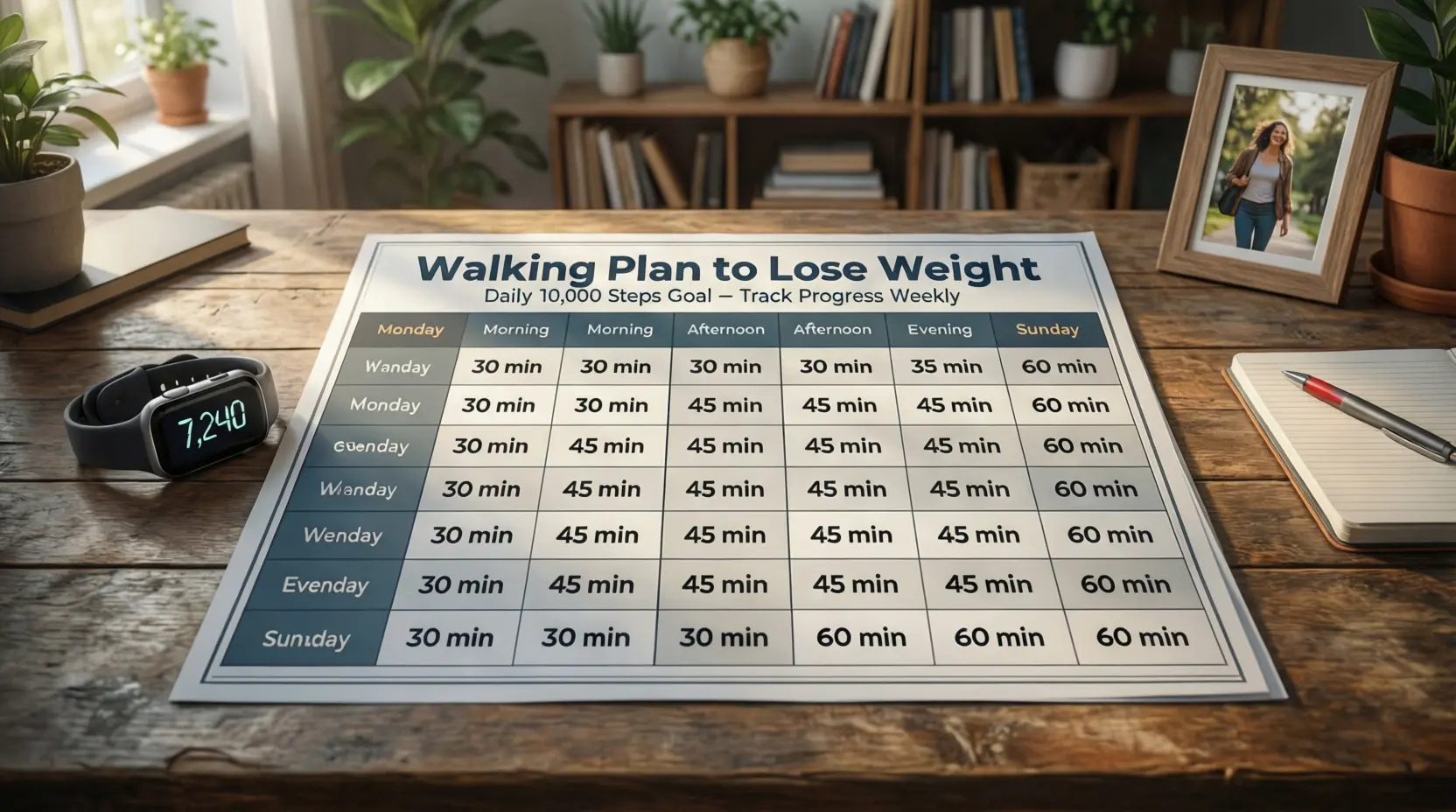
Frequency and Duration: Start by committing to walking at least 3–5 times a week. For beginners, aim for 20–30 minutes per session, and gradually increase the duration to 45–60 minutes as your fitness level improves. To maximize weight loss, aim for a brisk walking pace, which means walking fast enough to raise your heart rate but still being able to hold a conversation.
Vary Your Walks: Walking doesn’t have to be boring or repetitive. Mix up your routine by choosing different routes, walking on different terrains (like hills or trails), or adding intervals of faster walking. Interval walking—where you alternate between brisk walking and slower-paced recovery periods—can help increase your calorie burn and improve cardiovascular fitness.
Track Your Steps: A pedometer or fitness tracker can help you stay accountable and ensure you’re meeting your step goals. Aim for 8,000–10,000 steps per day, or about 4–5 miles. As you build endurance, you can increase your step count to achieve higher fitness levels.
Incorporate Rest Days: Rest is just as important as exercise. Be sure to take at least one or two days off each week to allow your body to recover and prevent burnout.
By following these guidelines, you’ll create a walking routine that not only fits into your schedule but also helps you achieve your weight loss goals in a safe and sustainable way.
Maximizing Calorie Burn While Walking
While walking is an excellent exercise for weight loss, there are strategies you can implement to maximize the number of calories you burn during each walk. The more efficiently you can increase your calorie expenditure, the faster you’ll see results. Here are some effective ways to get the most out of your walking routine.
Increase Your Walking Speed: The faster you walk, the more calories you’ll burn. A brisk pace, usually around 3–4 miles per hour, is ideal for weight loss. Aim to walk at a pace that makes you slightly out of breath but still able to hold a conversation. As your fitness improves, try increasing your speed over time to keep challenging yourself.
Add Inclines: Walking on an incline—whether it’s a hill, a treadmill set to a slope, or stairs—adds intensity to your walk and targets different muscle groups. Inclines require more effort, which leads to a higher calorie burn. Incorporating even short periods of uphill walking can significantly increase the fat-burning potential of your routine.
Incorporate Intervals: Interval walking is a fantastic way to burn more calories in less time. Alternate between periods of brisk walking (or even a slow jog, if you’re up for it) and periods of walking at a more moderate pace. This method, known as High-Intensity Interval Training (HIIT), increases your heart rate and keeps your metabolism elevated even after your walk is finished.
Use Your Arms: Engaging your arms by swinging them vigorously as you walk can increase your calorie burn by up to 10%. For an added challenge, consider using light hand weights or resistance bands.
Staying Motivated and Overcoming Challenges
Staying consistent with your walking plan can be challenging, especially when you encounter obstacles or feel your motivation slipping. However, there are several ways to stay on track and ensure that walking remains a regular part of your weight loss journey.
Set Small, Achievable Goals: Breaking your larger weight loss goals into smaller, more attainable milestones can make the process feel less overwhelming. For example, instead of focusing solely on the end goal of losing 20 pounds, set a target to walk an extra 1,000 steps per week or to complete a 30-minute walk five days a week. Celebrate each victory, no matter how small, to stay motivated.
Make Walking Enjoyable: If you find walking to be a chore, make it more enjoyable by incorporating elements you love. Listen to your favorite music, an interesting podcast, or an audiobook while you walk. You can also invite a friend or family member to join you, turning your walk into a social event. Changing your route regularly can also make the experience feel fresh and exciting.
Track Your Progress: Keeping track of your steps, distance, and time can help you stay accountable. Using a fitness tracker or a mobile app to log your walks provides a sense of accomplishment and helps you visualize your progress. It’s motivating to see how much you’ve improved over time.
Push Through Plateaus: It’s normal to hit a plateau where progress seems to slow down. To overcome this, change up your routine—try walking longer distances, increasing your pace, or adding interval training. Small adjustments will help you continue making progress.
Staying consistent with your walking plan, even through challenges, is key to long-term weight loss success.
The Role of Diet in Your Walking Plan
While walking is an excellent way to burn calories and promote weight loss, it’s essential to remember that exercise alone won’t lead to significant weight loss unless it’s paired with a balanced diet. Nutrition plays a crucial role in supporting your walking plan and maximizing the results you see.
Fueling Your Walks: To get the most out of your walking routine, it’s important to fuel your body with the right nutrients. Eating a light snack that includes both carbohydrates and protein about 30–60 minutes before walking can provide you with the energy you need for an effective workout. Examples include a banana with peanut butter or a small yogurt with granola. Avoid heavy meals that might make you feel sluggish during your walk.
Post-Walk Nutrition: After a walk, it’s important to replenish your energy stores and repair muscles. A balanced meal or snack with protein and healthy fats will help your body recover and keep your metabolism elevated. A protein shake, a handful of nuts, or a lean piece of chicken with vegetables are all excellent choices.
Caloric Deficit for Weight Loss: To lose weight, you need to create a caloric deficit, which means you’re burning more calories than you consume. While walking can help you burn calories, you should also be mindful of your food intake. Opt for whole, unprocessed foods like fruits, vegetables, lean proteins, and whole grains. Cutting back on sugary, processed foods can make a significant difference in your weight loss journey.
Hydration: Don’t forget to stay hydrated! Drinking water before, during, and after your walks is essential for maintaining energy levels and supporting your metabolism.
When combined with a healthy, balanced diet, walking becomes an even more powerful tool in achieving your weight loss goals.
Tracking Your Progress and Adjusting Your Plan
Tracking your progress is an essential part of any weight loss journey, especially when you’re following a walking plan. Not only does it keep you motivated, but it also helps you adjust your routine for continued success. Let’s explore how to effectively track your progress and make adjustments when needed.
Track Your Steps and Distance: Using a pedometer, fitness tracker, or smartphone app can help you keep track of the steps you take each day. Many trackers also allow you to monitor your walking distance, duration, and even the calories burned. Setting a daily step goal—such as 10,000 steps—can give you a target to aim for. Gradually increase this goal as you build endurance.
Monitor Your Weight and Measurements: While the number on the scale isn’t the only indicator of success, tracking your weight can give you a clear picture of your progress. In addition to weight, take measurements of your waist, hips, thighs, and other key areas. Sometimes, you may notice changes in these areas before your weight shifts, so taking measurements can provide a fuller picture of your progress.
Evaluate Your Energy and Mood: Weight loss isn’t just about numbers; it’s also about how you feel. Keep track of your energy levels and overall mood. Do you feel more energized after a walk? Are you noticing improvements in your sleep or mental clarity? These positive changes are often the first signs that your walking plan is working.
Adjust Your Plan as Needed: If you hit a plateau or feel like your routine isn’t as effective anymore, it’s time to adjust. This might mean increasing the intensity of your walks, adding more walking days, or combining your routine with strength training for better results.
Tracking and adjusting your plan is key to staying on track and achieving long-term success.
Frequently Asked Questions (FAQ)
1. How much weight can I expect to lose by walking?
The amount of weight you can lose through walking depends on various factors, including your diet, walking intensity, frequency, and duration. On average, walking 30 minutes a day, 5 days a week, could help you lose around 1–2 pounds per month when combined with a balanced diet. However, results vary, and consistency is key for long-term success.
2. Can walking alone help me lose belly fat?
Walking can help you reduce overall body fat, including belly fat, as part of a calorie deficit. While you cannot target fat loss in specific areas (like the belly), consistent walking combined with a healthy diet will contribute to fat loss across your entire body, including the stomach area.
3. How fast should I walk to lose weight?
To lose weight, aim for a brisk pace—typically 3–4 miles per hour, which should make your heart rate increase, but still allow you to carry on a conversation. The faster your walking pace, the more calories you’ll burn. However, it’s important to walk at a pace that feels sustainable and enjoyable for you.
4. How many steps should I walk each day for weight loss?
Aiming for 10,000 steps per day is a great target for weight loss. If you’re starting out, gradually work your way up to this goal. Remember, consistency is more important than hitting an exact number of steps.
5. Can walking help tone my body?
Yes, walking can help tone your legs, glutes, and core, especially if you incorporate inclines, intervals, and longer walks. To target muscle toning more effectively, consider adding strength training exercises to your routine.
Conclusion:
Walking is more than just a simple form of exercise—it’s a powerful tool for weight loss and overall health.
By incorporating a consistent walking routine into your lifestyle, you can burn calories, improve your cardiovascular health, and boost your mood, all while working towards your weight loss goals.
The best part is that walking is accessible, requires minimal equipment, and can be done anywhere, making it an ideal choice for people of all fitness levels.
Throughout this guide, we’ve explored how to create a walking plan that suits your individual needs and goals.
From setting realistic goals and designing a routine to maximizing calorie burn and adjusting your diet, these tips will help you make walking a successful part of your weight loss journey.
It’s important to stay consistent, track your progress, and celebrate the small wins along the way.
Remember that weight loss is a gradual process, and sustainable results come from making small, consistent changes over time.
By combining regular walking with a balanced diet, hydration, and proper rest, you’re setting yourself up for long-term success.
If you’re walking to lose weight, improve your fitness, or simply stay active, the key is to keep moving. So, lace up your shoes, step outside, and start walking your way to a healthier, happier you!

I’m Robert Silva, a quotes expert at Quotesfuel.com — delivering powerful words and daily inspiration to keep your spirit fueled!