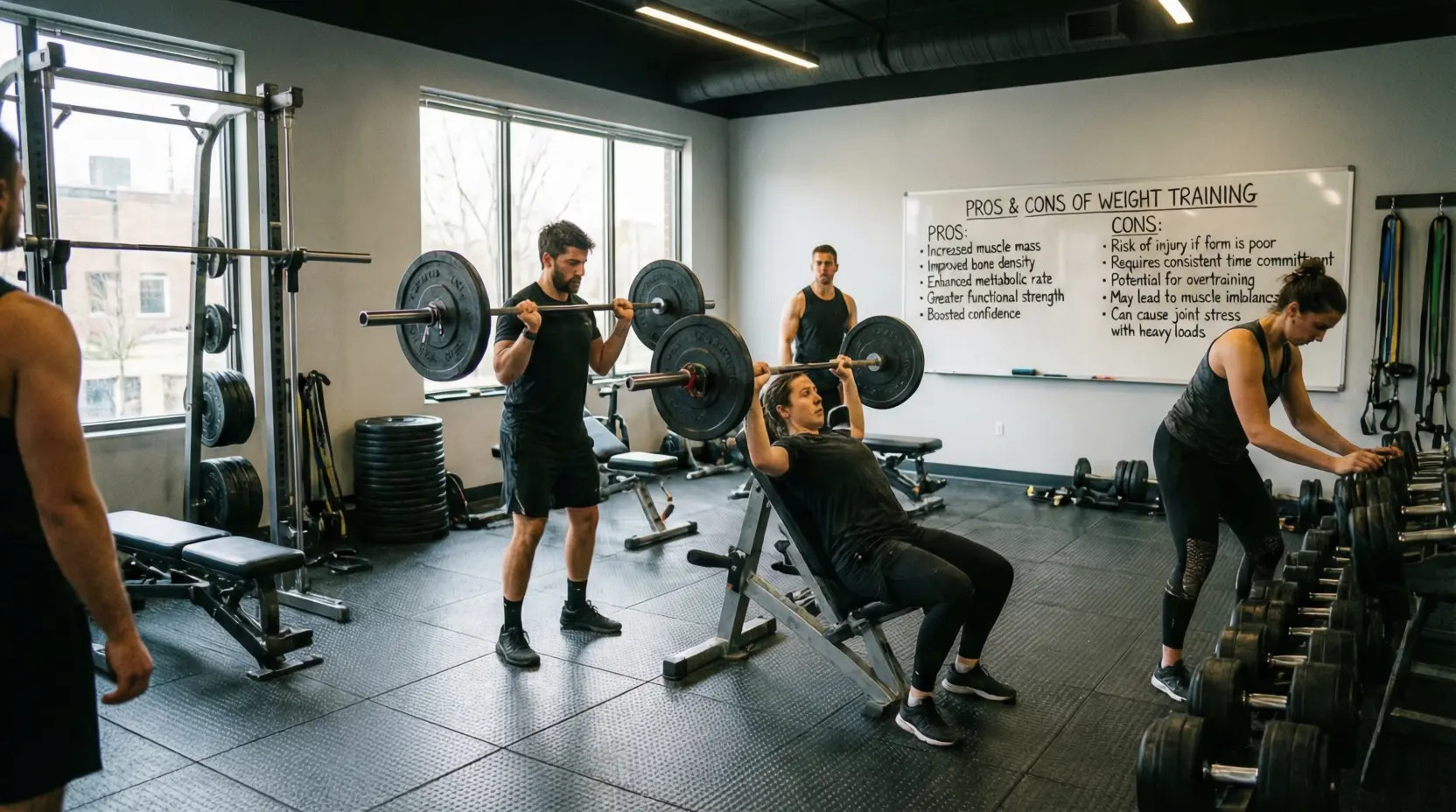
Weight training has become one of the most effective and popular forms of exercise for people looking to improve strength, health, and overall fitness.
From beginners stepping into the gym for the first time to experienced athletes pushing their limits, weight training offers a wide range of physical and mental benefits.
At the same time, it also comes with certain risks and challenges that should not be ignored. Understanding the pros and cons of weight training is essential for making informed fitness decisions and achieving long-term results safely.
At FNTK Gym, weight training is approached with a balance of proper technique, structured programs, and professional guidance.
If your goal is to build muscle, lose fat, boost metabolism, or improve daily functional strength, knowing both the advantages and disadvantages of weight training can help you train smarter.
This article explores all aspects of weight training to help you decide if it’s the right fitness path for you.
What Is Weight Training?
Weight training, also known as strength training or resistance training, is a form of exercise that involves working against resistance to build muscle strength, endurance, and overall physical performance. This resistance can come from free weights such as dumbbells and barbells, weight machines, resistance bands, or even body weight. The primary goal of weight training is to challenge the muscles, causing them to adapt and grow stronger over time.
Unlike cardio-based exercises that mainly focus on heart health and calorie burning, weight training targets specific muscle groups. Exercises such as squats, deadlifts, bench presses, rows, and shoulder presses are designed to improve muscular strength, stability, and coordination. Weight training programs can be customized to suit different goals, including muscle building (hypertrophy), fat loss, strength development, or general fitness.
At FNTK Gym, weight training is supported by a well-equipped environment that includes modern machines, free-weight areas, and professional guidance. This allows members to perform exercises safely while maintaining proper form and progression. Weight training is not limited to bodybuilders or athletes—it is suitable for beginners, older adults, and anyone looking to improve daily functional strength.
When done correctly, weight training also enhances posture, balance, and joint support. However, proper technique, gradual progression, and recovery are essential components. Understanding what weight training involves is the first step toward maximizing its benefits while minimizing potential risks, making it a powerful and versatile training method for long-term health and fitness.
Major Pros of Weight Training
Weight training offers a wide range of benefits that go beyond building muscle, making it one of the most effective forms of exercise for overall health and fitness. One of the most significant advantages of weight training is increased muscle strength and size. Regular resistance exercises stimulate muscle growth, which helps improve physical performance and daily functional movement.
Another key benefit is its positive impact on metabolism and fat loss. As muscle mass increases, the body burns more calories even at rest, making weight training an excellent tool for long-term weight management. Unlike quick-fix workouts, strength training delivers sustainable results when combined with proper nutrition and consistency.
Weight training also plays a crucial role in improving bone density and joint health. Weight-bearing exercises strengthen bones and connective tissues, reducing the risk of osteoporosis and age-related muscle loss. This makes weight training beneficial not only for younger individuals but also for older adults looking to maintain mobility and independence.
Mental and emotional health improvements are another major advantage. Weight training has been shown to reduce stress, boost confidence, and improve overall mood by releasing endorphins. Achieving strength goals can enhance self-discipline and motivation, contributing to better mental resilience.
At FNTK Gym, these benefits are amplified through professional trainers, modern equipment, and a supportive training environment. With structured programs and proper supervision, members can train safely and efficiently. Overall, the pros of weight training make it a powerful and versatile fitness approach suitable for a wide range of goals and lifestyles.
Cons and Limitations of Weight Training
While weight training offers numerous benefits, it is important to understand its limitations and potential drawbacks. One of the most common concerns is the risk of injury. Improper form, lifting weights that are too heavy, or skipping warm-ups can lead to muscle strains, joint pain, or more serious injuries. Beginners are especially vulnerable if they attempt advanced exercises without proper instruction or supervision.
Another limitation of weight training is the learning curve involved. For those new to the gym, understanding correct techniques, equipment usage, and training principles such as progressive overload can feel overwhelming. Without guidance, this confusion may result in poor results or frustration, causing some individuals to lose motivation early on.
Weight training also requires consistency, time, and adequate recovery. Results do not appear overnight, and muscle growth depends on regular training sessions combined with sufficient rest. Overtraining or neglecting recovery can lead to fatigue, burnout, or plateaus in progress. Additionally, balancing gym workouts with work, family, and other responsibilities can be challenging for some people.
Certain physical or medical conditions may limit the suitability of weight training. Individuals with joint issues, back problems, or chronic health conditions may need modified programs or medical clearance before lifting weights. Cost can also be a factor, as gym memberships and personal training services may not be accessible to everyone.
At FNTK Gym, many of these limitations can be minimized through professional guidance and safe training practices. However, being aware of the potential downsides helps individuals approach weight training responsibly and make informed fitness decisions.
Common Myths About Weight Training
Weight training is often surrounded by misconceptions that prevent people from fully embracing its benefits. One of the most common myths is that weight training automatically makes people bulky. In reality, building large muscle mass requires specific training intensity, nutrition, and consistency over time. Most individuals who lift weights develop a leaner, more toned physique rather than excessive muscle size.
Another widespread myth is that weight training is only for young people or professional athletes. This is far from the truth. Weight training can be safely adapted for all age groups, including older adults, and is highly effective for maintaining muscle mass, bone density, and mobility as the body ages. With proper guidance, anyone can benefit from resistance training.
Many people also believe that women should avoid lifting heavy weights due to fears of becoming overly muscular. However, women naturally have lower testosterone levels, making extreme muscle growth unlikely. Instead, weight training helps women improve strength, posture, metabolism, and overall body composition.
Another misconception is that cardio is better than weight training for fat loss. While cardio burns calories during exercise, weight training contributes to long-term fat loss by increasing muscle mass and metabolic rate. The most effective fitness programs often combine both methods.
At FNTK Gym, trainers actively educate members to overcome these myths by promoting science-based training approaches. Understanding the reality behind weight training helps individuals train with confidence, set realistic goals, and achieve sustainable fitness results.
Weight Training for Different Fitness Goals
Weight training is a highly adaptable form of exercise that can be tailored to suit a wide range of fitness goals. For beginners, the primary focus is learning proper technique, building a strong foundation, and developing consistency. Simple movements using light weights or machines help improve coordination and confidence while reducing the risk of injury. At FNTK Gym, beginners benefit from structured programs and professional guidance to ensure safe progression.
For those aiming to build muscle, weight training emphasizes progressive overload, where resistance is gradually increased over time. This approach stimulates muscle growth and strength development when combined with adequate nutrition and recovery. Individuals pursuing fat loss can also benefit greatly from weight training, as increased muscle mass boosts metabolism and supports long-term weight management. When paired with cardio and a balanced diet, resistance training enhances fat-burning efficiency.
Athletes and performance-focused individuals use weight training to improve power, speed, and endurance. Sport-specific exercises strengthen key muscle groups, enhance stability, and reduce the risk of injury. Older adults can also benefit from weight training, as it helps counter age-related muscle loss, improves balance, and supports independence in daily activities.
Weight training can be adjusted for different fitness levels, time commitments, and physical conditions. The key is customization and consistency. At FNTK Gym, personalized workout plans allow members to align their training with individual goals, whether they are focused on general fitness, strength, or overall well-being. This flexibility makes weight training one of the most effective and inclusive fitness methods available.
Safety Tips for Weight Training
Safety is a critical aspect of effective weight training, especially for beginners and those returning after a break. One of the most important safety principles is proper warm-up and cool-down. Warming up increases blood flow to the muscles, improves mobility, and prepares the body for lifting, while cooling down helps reduce muscle stiffness and supports recovery.
Using correct lifting technique is essential to prevent injuries. Poor form can place unnecessary stress on joints, ligaments, and the lower back. Starting with lighter weights and focusing on controlled movements allows the body to adapt safely. Gradually increasing resistance over time, known as progressive overload, helps build strength without overwhelming the muscles.
Rest and recovery are equally important as the workout itself. Muscles grow and repair during rest periods, not during training sessions. Overtraining can lead to fatigue, decreased performance, and a higher risk of injury. Incorporating rest days and ensuring adequate sleep supports long-term progress.
Listening to your body is another key safety practice. Pain, sharp discomfort, or persistent soreness should not be ignored. Modifying exercises or taking additional recovery time can prevent minor issues from becoming serious injuries. Hydration and proper nutrition also play an important role in maintaining strength and endurance during workouts.
At FNTK Gym, professional trainers provide guidance on technique, progression, and recovery, creating a safe and supportive training environment. By following these safety tips, individuals can maximize the benefits of weight training while minimizing risks and ensuring sustainable fitness progress.
How to Decide If Weight Training Is Right for You
Deciding whether weight training is right for you depends on your fitness goals, lifestyle, and physical condition. If your aim is to build strength, improve body composition, or enhance overall health, weight training can be an excellent choice. It supports muscle development, boosts metabolism, and improves functional movement, making everyday tasks easier and more efficient.
Before starting, it’s important to assess your current fitness level and any physical limitations. Beginners or individuals with prior injuries should approach weight training gradually and prioritize proper technique. Consulting a fitness professional can help you determine suitable exercises and prevent unnecessary strain. Those with medical conditions may also benefit from seeking medical clearance before beginning a strength-training program.
Time commitment is another factor to consider. Weight training requires consistency to produce results, but it does not necessarily demand long hours in the gym. Well-structured sessions, even a few times per week, can deliver noticeable improvements over time. Understanding your schedule and choosing a realistic training plan will help maintain long-term motivation.
Personal preference also plays a role. Some people enjoy structured workouts and measurable progress, while others may prefer more dynamic or cardio-focused activities. At FNTK Gym, trial sessions and personalized programs allow individuals to explore weight training in a supportive environment before fully committing.
Ultimately, weight training is suitable for most people when done correctly. By aligning your goals, abilities, and interests, you can determine whether weight training fits your fitness journey and supports your long-term well-being.
Frequently Asked Questions (FAQs)
Many people considering weight training have common questions, especially when starting out. One of the most frequently asked questions is how often weight training should be done. For most individuals, training two to four times per week is sufficient to see strength and fitness improvements, provided workouts are well-structured and include adequate recovery.
Another common question is whether weight training is safe for beginners. When performed with proper technique, appropriate weights, and professional guidance, weight training is generally safe for beginners. Starting slow and focusing on form rather than heavy lifting significantly reduces the risk of injury.
People also often ask if weight training alone can help with weight loss. Weight training is highly effective for fat loss because it increases muscle mass and boosts metabolism. However, the best results usually come from combining weight training with cardiovascular exercise and a balanced diet.
Many individuals wonder how long it takes to see results from weight training. While this varies depending on consistency, nutrition, and genetics, most people notice strength improvements within a few weeks and visible body changes within two to three months. Patience and consistency are key factors.
Another frequent question is whether a personal trainer is necessary. While not mandatory, a trainer can be extremely beneficial, especially for beginners. Trainers help with correct form, personalized programs, and motivation. At FNTK Gym, professional trainers are available to guide members at every stage of their fitness journey.
These frequently asked questions highlight common concerns and misconceptions. Understanding the basics of weight training helps individuals set realistic expectations, train safely, and stay committed to their long-term fitness goals.
Conclusion
Weight training is a powerful and versatile form of exercise that offers a wide range of physical, mental, and lifestyle benefits.
From building muscle and increasing strength to improving metabolism, bone density, and overall confidence, weight training can positively impact people at every stage of their fitness journey.
At the same time, it is important to recognize the potential challenges, such as the risk of injury, the need for proper technique, and the commitment required to see long-term results.
Understanding both the pros and cons allows individuals to approach weight training in a safe, informed, and effective way.
When done correctly and with professional guidance, weight training becomes more than just lifting weights—it becomes a structured path toward better health and improved quality of life.
Gyms like FNTK Gym provide the right environment, equipment, and expert support to help individuals train confidently and safely, regardless of their experience level or fitness goals.
If you are considering starting weight training or looking to improve your current routine, now is the perfect time to take action.
Visit FNTK Gym, speak with a professional trainer, and explore personalized training programs designed to match your needs.
If your goal is strength, fat loss, or overall wellness, weight training can help you achieve lasting results. Take the first step today and invest in a stronger, healthier future. 💪

I’m Etalia Robert, a quotes expert at Quotesfuel.com — sharing inspiring words and timeless wisdom to fuel your motivation every day!