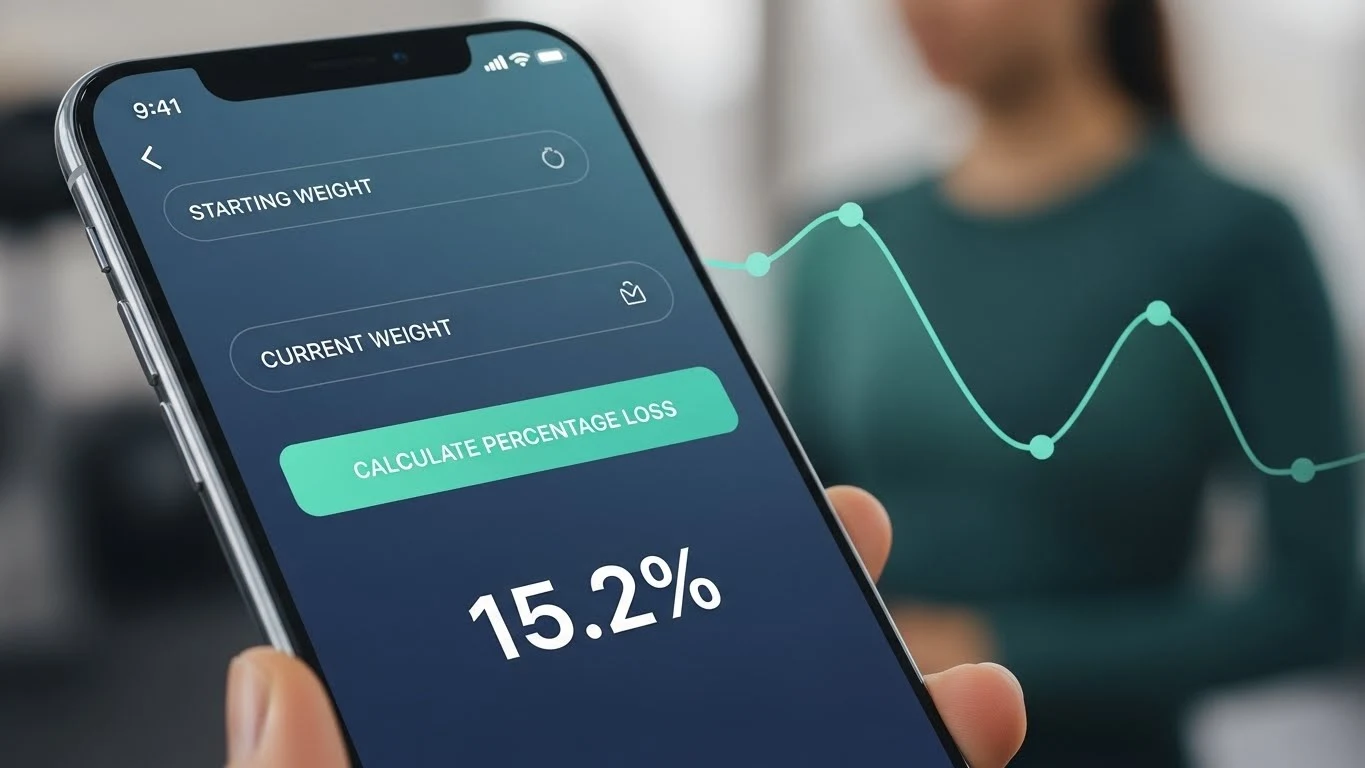
Tracking your weight loss journey can be challenging, especially when focusing only on pounds or kilograms. This is where a Percentage Weight Loss Calculator becomes a game-changer.
By calculating your weight loss as a percentage of your starting weight, you get a clearer and more motivating picture of your progress.
If you’re aiming for gradual, sustainable weight loss or trying to hit a specific fitness goal, knowing your weight loss percentage helps you measure success more accurately than just looking at the scale.
Many people wonder how to calculate weight loss percentage or whether they’re on track with their goals.
This article will guide you step by step on how to use a weight loss calculator, explain the benefits of tracking weight loss in percentage, highlight common mistakes, and show you how to monitor your progress effectively.
What is a Percentage Weight Loss Calculator?
A Percentage Weight Loss Calculator is a simple tool that helps you measure your weight loss relative to your starting weight. Unlike tracking only pounds or kilograms lost, calculating weight loss as a percentage gives you a clearer picture of your progress. For example, losing 10 pounds may feel significant for someone weighing 150 pounds, but the same 10 pounds might not make much difference for someone weighing 300 pounds. By using percentages, you can see progress in a way that is fair and motivating for any body type.
The formula for calculating percentage weight loss is straightforward:Percentage Weight Loss=Starting Weight – Current WeightStarting Weight×100\text{Percentage Weight Loss} = \frac{\text{Starting Weight – Current Weight}}{\text{Starting Weight}} \times 100Percentage Weight Loss=Starting WeightStarting Weight – Current Weight×100
For example, if your starting weight is 200 pounds and your current weight is 180 pounds, your weight loss percentage would be:200−180200×100=10%\frac{200 – 180}{200} \times 100 = 10\%200200−180×100=10%
This tool is valuable for anyone on a weight loss journey because it allows you to track your results more accurately, compare progress over time, and stay motivated. Many online calculators also allow you to set goals and monitor your achievements. Using a weight loss percentage calculator ensures that your efforts are measured effectively, helping you maintain realistic expectations and celebrate milestones along the way.
How to Use a Percentage Weight Loss Calculator
Using a Percentage Weight Loss Calculator is quick and simple, whether you prefer a manual calculation or an online tool. First, gather your starting weight and current weight. If you have a goal weight, you can include that too to track progress toward your target. Accuracy is key, so weigh yourself at the same time of day, ideally in the morning and without clothes, to avoid fluctuations caused by food or water intake.
To calculate manually, use this formula:Weight Loss Percentage=Starting Weight – Current WeightStarting Weight×100\text{Weight Loss Percentage} = \frac{\text{Starting Weight – Current Weight}}{\text{Starting Weight}} \times 100Weight Loss Percentage=Starting WeightStarting Weight – Current Weight×100
For example, if your starting weight was 180 pounds and your current weight is 162 pounds, the calculation is:180−162180×100=10%\frac{180 – 162}{180} \times 100 = 10\%180180−162×100=10%
If you prefer convenience, online calculators simplify this process. Simply enter your starting weight, current weight, and optional goal weight. The calculator instantly displays your weight loss percentage, saving you time and reducing errors. Many apps also allow you to track your progress over weeks or months, create graphs, and set reminders for weighing in.
Using a percentage weight loss calculator regularly helps you stay accountable, understand your progress clearly, and adjust your diet or exercise routine as needed. By tracking results consistently, you can celebrate milestones, stay motivated, and achieve your fitness goals more efficiently.
Benefits of Tracking Weight Loss by Percentage
Tracking your weight loss as a percentage instead of just pounds or kilograms offers several important benefits. One of the main advantages is clarity. Seeing your progress in percentage terms allows you to understand how much of your total weight has been lost, making it easier to compare results over time. For example, losing 10 pounds might feel like a small change on the scale, but if it represents 5–10% of your starting weight, it is a meaningful achievement.
Another benefit is motivation. Percentage tracking provides a realistic view of your progress regardless of body type or starting weight. Unlike absolute numbers, percentages account for differences in body size, helping you stay encouraged when results are not immediately visible on the scale.
Tracking weight loss in percentage terms also supports goal setting. By knowing your total weight loss percentage, you can break larger goals into smaller milestones, such as aiming for 5% or 10% weight loss over a specific period. This makes achieving long-term goals more manageable and rewarding.
Finally, accuracy and accountability are enhanced. Using a Percentage Weight Loss Calculator ensures your progress is measured consistently, reducing confusion caused by daily fluctuations in weight due to water retention or food intake. It also allows you to adjust your diet and exercise routines based on measurable results, keeping your weight loss journey efficient and effective.
Manual Calculation vs Online Calculator
When it comes to tracking your weight loss, you have two main options: manual calculation or using an online Percentage Weight Loss Calculator. Both methods allow you to determine your weight loss percentage, but each has its own advantages and considerations.
Manual calculation is simple and requires no internet or apps. All you need is your starting weight, current weight, and the formula:Weight Loss Percentage=Starting Weight – Current WeightStarting Weight×100\text{Weight Loss Percentage} = \frac{\text{Starting Weight – Current Weight}}{\text{Starting Weight}} \times 100Weight Loss Percentage=Starting WeightStarting Weight – Current Weight×100
For example, if your starting weight is 200 pounds and your current weight is 180 pounds, the calculation is:200−180200×100=10%\frac{200 – 180}{200} \times 100 = 10\%200200−180×100=10%
Manual calculation gives you full control and a clear understanding of the math behind your progress. However, it can be prone to errors, especially if you forget to track weights consistently or miscalculate.
On the other hand, online calculators are faster and more convenient. You simply enter your starting weight, current weight, and optional goal weight, and the tool calculates your percentage instantly. Many online calculators also offer additional features, such as progress charts, reminders, and historical tracking over weeks or months. These tools minimize human error and make it easier to monitor your journey consistently.
Ultimately, both methods are effective. Choosing between them depends on your preference for simplicity and control versus convenience and automation. Many people use a combination: manual calculation for quick checks and online calculators for ongoing tracking and motivation.
Common Mistakes in Calculating Weight Loss Percentage
Even with a Percentage Weight Loss Calculator, people often make mistakes that can distort their understanding of progress. One common error is tracking daily fluctuations. Your weight naturally varies due to water retention, food intake, or hormonal changes. Checking the scale multiple times a day and calculating percentage loss each time can lead to frustration or false conclusions. It’s best to weigh yourself consistently, ideally once a week at the same time, to get accurate trends.
Another mistake is ignoring muscle gain. If you are exercising and building muscle, the scale may not reflect fat loss accurately. Muscle weighs more than fat, so your percentage weight loss might appear lower even though your body composition is improving. To address this, consider combining weight tracking with body measurements or body fat percentage.
Some people miscalculate the formula by using current weight instead of starting weight in the denominator. This can produce misleading percentages and create unrealistic expectations. Always remember:Weight Loss Percentage=Starting Weight – Current WeightStarting Weight×100\text{Weight Loss Percentage} = \frac{\text{Starting Weight – Current Weight}}{\text{Starting Weight}} \times 100Weight Loss Percentage=Starting WeightStarting Weight – Current Weight×100
Lastly, focusing solely on the scale is a mistake. Weight loss is more than numbers; it includes improved fitness, strength, and health. Using a Percentage Weight Loss Calculator correctly, while being mindful of these factors, ensures accurate tracking and maintains motivation throughout your fitness journey.
Ideal Weight Loss Goals in Percentage
Setting realistic weight loss goals is essential for long-term success, and tracking your progress using a Percentage Weight Loss Calculator helps you stay on course. Health experts recommend a safe and sustainable weight loss rate of about 0.5% to 2% of your body weight per week. This gradual approach reduces the risk of nutrient deficiencies, muscle loss, and rebound weight gain.
For example, if your starting weight is 180 pounds, a weekly weight loss of 1–2% would be approximately 1.8–3.6 pounds. Over a month, this could result in a 5–8% reduction in total body weight, which is significant and realistic. Tracking these percentages allows you to measure your progress accurately, even when the scale doesn’t show dramatic changes.
Using percentages also makes goal setting more personalized and motivating. Instead of aiming for an arbitrary number of pounds, you can focus on achievable milestones, such as losing 5%, 10%, or 15% of your starting weight. Reaching these milestones provides a sense of accomplishment and encourages consistency in your diet and exercise routine.
Additionally, understanding your ideal weight loss percentage can help you tailor your fitness plan. It allows you to adjust your calorie intake, exercise intensity, and lifestyle habits according to your progress. By combining realistic goals with consistent tracking, the Percentage Weight Loss Calculator becomes an invaluable tool for achieving sustainable and healthy weight loss.
How to Track Your Progress Over Time
Tracking your weight loss over time is one of the most effective ways to stay motivated and achieve your goals. Using a Percentage Weight Loss Calculator allows you to measure progress consistently, but pairing it with long-term tracking tools provides even more insight.
One of the easiest methods is to record your weekly or monthly percentage weight loss in a journal, spreadsheet, or note-taking app. By plotting these percentages on a graph, you can clearly see trends, identify plateaus, and celebrate small milestones. Visualizing progress makes it easier to stay committed and adjust your routine if needed.
Fitness apps and online tools make tracking even simpler. Many apps automatically calculate your weight loss percentage and generate charts, showing how close you are to your goals. You can also set reminders for weekly weigh-ins, ensuring that your data is consistent and accurate.
Another useful method is combining percentage tracking with other measurements, such as body measurements, clothing fit, or body fat percentage. These indicators provide a more comprehensive view of your transformation and prevent discouragement if the scale doesn’t reflect all the changes.
Consistent tracking over time empowers you to make informed decisions about your diet, exercise, and lifestyle. By monitoring trends rather than daily fluctuations, the Percentage Weight Loss Calculator becomes a practical tool for achieving sustainable results while keeping motivation high.
Percentage Weight Loss and Body Composition
While a Percentage Weight Loss Calculator is an excellent tool for tracking overall weight loss, it doesn’t provide the full picture of your body composition. Body composition refers to the proportion of fat, muscle, and other tissues in your body. Since muscle is denser than fat, you may see minimal changes on the scale even while losing fat and gaining muscle.
For example, if you start a strength training program, your weight might remain stable or even increase slightly, but your body fat percentage could decrease significantly. This is why tracking weight loss percentage alone may not fully reflect the improvements in your health and physique.
To get a clearer understanding, consider combining percentage weight loss tracking with body fat measurements, waist circumference, or fitness assessments. Many modern scales and fitness apps provide estimated body fat percentage alongside weight, giving a more complete view of your progress.
Understanding the relationship between weight loss percentage and body composition is also helpful for setting realistic goals. For instance, someone aiming to lose 10% of body weight might focus on losing fat while preserving or increasing lean muscle mass. This approach not only improves appearance but also boosts metabolism and overall fitness.
By incorporating body composition into your tracking routine, the Percentage Weight Loss Calculator becomes even more effective. You’ll be able to celebrate real progress, make informed adjustments to your fitness plan, and achieve healthier, long-term results.
FAQs:
1. How accurate is a percentage weight loss calculator?
The calculator is accurate when you use consistent and precise measurements. Weighing yourself at the same time of day, preferably in the morning and without clothes, ensures reliable results.
2. Can I calculate body fat percentage with it?
No, a percentage weight loss calculator only measures changes in total body weight. For body fat percentage, you need specialized scales, calipers, or professional assessments.
3. How often should I track my weight?
Weekly tracking is recommended. Daily weigh-ins can be misleading due to water retention, food intake, and other fluctuations. Weekly checks give a more consistent view of your progress.
4. Does it consider muscle gain?
Not directly. The calculator measures only weight changes. If you gain muscle while losing fat, your percentage weight loss may appear smaller even though your body composition is improving. Combining weight tracking with body measurements or body fat percentage is ideal.
5. How can I use it for motivation?
Tracking percentage loss over time helps you visualize progress and set realistic goals. Celebrating milestones, such as 5% or 10% total weight loss, keeps you motivated and accountable.
Conclusion
A Percentage Weight Loss Calculator is an essential tool for anyone looking to track their fitness journey accurately. Unlike focusing solely on pounds or kilograms, calculating weight loss as a percentage gives a clearer picture of your progress, regardless of your starting weight.
By using this tool, you can set realistic goals, monitor trends over time, and stay motivated as you reach each milestone.
While it’s important to remember that weight is only one aspect of health, combining percentage tracking with body measurements or body composition insights provides a complete understanding of your transformation.
Avoid common mistakes like daily weighing or ignoring muscle gain, and use the calculator consistently for reliable results.
Start incorporating a Percentage Weight Loss Calculator into your routine today. By tracking your progress accurately, you can make informed adjustments to your diet and exercise plan, celebrate achievements, and achieve sustainable, long-term weight loss success.

I’m Etalia Robert, a quotes expert at Quotesfuel.com — sharing inspiring words and timeless wisdom to fuel your motivation every day!