Have you ever noticed the scale creeping up after a weekend of drinking? You’re not alone. Many people wonder whether their love for alcohol is secretly sabotaging their weight goals.
Alcohol is often enjoyed socially or to unwind, but it comes with more than just a buzz—it can affect your metabolism, appetite, and fat storage.
Understanding how alcohol impacts weight gain is essential for anyone trying to maintain or lose weight.
From “empty calories” to hormonal changes and the tempting urge to snack, alcohol interacts with your body in multiple ways that can lead to extra pounds over time.
In this article, we’ll explore the science behind alcohol and weight gain, break down calorie content for different drinks, discuss its effect on appetite and metabolism, and share practical tips so you can enjoy a drink without sabotaging your health goals.
How Alcohol Affects Your Body and Metabolism
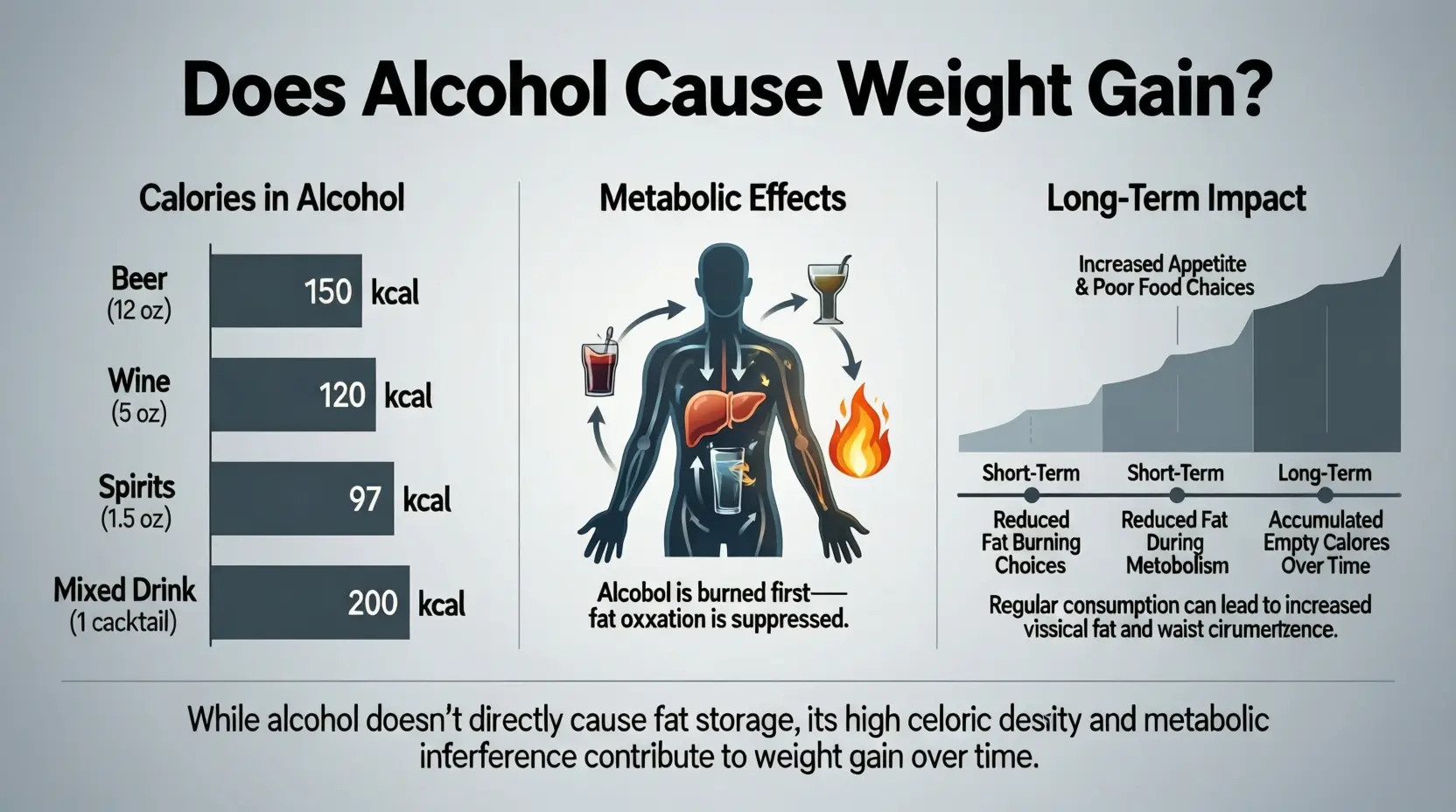
When you drink alcohol, your body treats it differently from other nutrients. Unlike carbohydrates, fats, or proteins, alcohol cannot be stored for later use, so your liver prioritizes breaking it down immediately. This means that while your liver is busy metabolizing alcohol, your body temporarily slows down fat burning, which can contribute to weight gain over time.
Alcohol also contains “empty calories”—calories that provide energy but little to no nutritional value. A standard beer or cocktail can contain anywhere from 100 to 300 calories or more, and sugary mixers can push this even higher. Consuming these extra calories frequently can add up quickly, making weight gain almost inevitable if not accounted for in your diet.
In addition, alcohol affects hormones related to appetite and fat storage. Drinking can increase ghrelin, the hormone that signals hunger, while reducing leptin, the hormone that signals fullness. This hormonal imbalance often leads to overeating, especially late-night snacking on high-calorie foods.
Short-term, alcohol can cause bloating and water retention, making you feel heavier. Long-term, frequent drinking can lead to fat accumulation, particularly around the abdomen, and may increase the risk of metabolic issues such as insulin resistance. Understanding these effects is crucial for managing weight while enjoying alcohol in moderation.
Calories in Different Types of Alcohol
Not all alcoholic drinks are created equal when it comes to calories. Understanding the calorie content of different types of alcohol can help you make smarter choices and prevent unintended weight gain.
Beer is often associated with the infamous “beer belly.” A standard 12-ounce beer contains about 150 calories, but craft beers or high-alcohol varieties can have 200–300 calories per serving.
Wine can vary depending on type and sweetness. A 5-ounce glass of dry red or white wine typically has 120–125 calories, while sweet wines or dessert wines can reach 200 calories or more.
Spirits and liquors, such as vodka, rum, gin, or whiskey, generally have around 64 calories per 1-ounce shot. However, the calories skyrocket when mixed with sugary beverages like soda, juice, or cocktail syrups. For example, a cocktail like a margarita or piña colada can contain 300–500 calories in a single drink.
Alcohol and Appetite: How Drinking Can Lead to Overeating
One of the less obvious ways alcohol contributes to weight gain is by influencing appetite. Drinking alcohol can interfere with the hormones that regulate hunger and fullness. For example, alcohol increases ghrelin, the hormone that signals hunger, while reducing leptin, the hormone that tells your brain you’re full. This imbalance often leads to eating more than you normally would, even if you just had a meal.
Alcohol also lowers inhibitions, making it easier to indulge in high-calorie foods, snacks, or late-night meals. Ever notice how social drinking often comes with greasy appetizers, pizza, or desserts? That’s no coincidence—alcohol encourages cravings for fatty and sugary foods, which further adds to your calorie intake.
Additionally, drinking slows down decision-making and impulse control. You may plan to have just one drink or skip dessert, but once alcohol is in your system, your willpower can be compromised. Over time, these repeated episodes can contribute significantly to weight gain.
Short-Term vs. Long-Term Weight Gain from Alcohol
Alcohol affects your body in both the short-term and long-term, and understanding the difference can help you manage weight effectively.
In the short term, drinking alcohol can cause bloating and water retention. Many alcoholic beverages, especially beer and cocktails, contain sodium and carbohydrates that lead to temporary fluid accumulation. This may make you feel heavier or notice swelling in the abdomen, even if it’s not actual fat gain. Additionally, alcohol can disrupt sleep and hydration, both of which can influence short-term weight fluctuations.
Over the long term, frequent alcohol consumption can contribute to real fat accumulation, particularly around the midsection. Because your liver prioritizes metabolizing alcohol over fat, excess calories from both alcohol and accompanying snacks are more likely to be stored as fat. Studies show that people who regularly drink heavily are at higher risk for developing abdominal obesity and increased body mass index (BMI).
Chronic alcohol use can also lead to insulin resistance, hormonal imbalances, and fatty liver disease—all of which make it harder for your body to burn fat efficiently. Unlike short-term bloating, these changes can be persistent and require lifestyle adjustments, including moderating alcohol intake and maintaining a balanced diet.
Other Health Impacts of Excessive Alcohol
While weight gain is a common concern, alcohol affects more than just the number on the scale. Excessive drinking can lead to serious health issues that indirectly influence your ability to maintain a healthy weight.
One major concern is liver health. Heavy drinking over time can cause fatty liver disease, which reduces the liver’s ability to metabolize fat efficiently. This not only contributes to abdominal fat accumulation but can also interfere with overall metabolism.
Alcohol also increases the risk of heart disease and high blood pressure, especially when combined with poor diet and excess weight. Chronic alcohol use can affect cholesterol levels and promote inflammation, both of which impact cardiovascular health.
Another consequence is blood sugar imbalance and insulin resistance. Alcohol can disrupt glucose metabolism, making it more likely for excess calories to be stored as fat. This can be particularly problematic for people at risk of type 2 diabetes.
Additionally, alcohol affects mental health, sleep, and stress levels. Poor sleep and high stress can trigger overeating and cravings, further promoting weight gain.
Tips to Enjoy Alcohol Without Gaining Weight
You don’t have to give up alcohol entirely to maintain a healthy weight. With mindful choices and moderation, it’s possible to enjoy drinks without sabotaging your goals.
1. Choose lower-calorie drinks.
Opt for dry wine, light beer, or clear spirits like vodka, gin, or tequila. Avoid creamy or sugary cocktails that can contain 300–500 calories per serving.
2. Watch your mixers.
Sugary sodas, juices, and syrups drastically increase the calorie content of your drinks. Replace them with soda water, sparkling water, or a splash of fresh citrus for flavor.
3. Hydrate.
Drinking a glass of water between alcoholic beverages slows consumption and reduces total calories, while also preventing dehydration and bloating.
4. Eat before drinking.
Having a balanced meal with protein, healthy fats, and fiber can reduce cravings and prevent overeating later.
5. Practice portion control.
Stick to standard drink sizes and limit your drinking frequency. Overindulging, even occasionally, can add hundreds of extra calories.
6. Plan ahead for social events.
Decide how many drinks you’ll have, and pair them with lighter snacks if needed. Tracking intake can help you stay within your calorie goals.
FAQs
1. Does red wine cause weight gain?
Red wine contains calories like any alcoholic drink, but moderate consumption (one glass per day) is unlikely to cause significant weight gain. Overconsumption, however, adds extra calories that can accumulate over time.
2. Can beer cause a “beer belly”?
Yes, frequent beer consumption can contribute to abdominal fat. Beer contains calories from both alcohol and carbohydrates, which your body may store as fat if consumed in excess.
3. Can weight gained from alcohol be reversed?
Absolutely. Reducing alcohol intake, choosing lower-calorie drinks, and maintaining a balanced diet with regular exercise can help shed alcohol-related weight.
4. How does alcohol affect metabolism?
Alcohol slows down fat burning because the liver prioritizes metabolizing alcohol over fats and carbs. Over time, this can lead to fat accumulation, especially in the abdomen.
5. Is occasional drinking safe for weight management?
Yes. Moderate drinking (e.g., 1–2 drinks a few times a week) is unlikely to cause significant weight gain if total calorie intake remains controlled. Mindful drinking is key.
Conclusion
Alcohol can contribute to weight gain in multiple ways, from the extra calories it provides to its impact on metabolism, hormones, and appetite.
Drinking slows fat burning because the liver prioritizes processing alcohol over other nutrients, while also increasing hunger through hormonal changes.
Coupled with the common tendency to snack on high-calorie foods while drinking, this “double effect” makes alcohol a hidden contributor to weight gain.
Short-term effects like bloating and water retention may make you feel heavier immediately, while long-term excessive drinking can lead to abdominal fat accumulation, insulin resistance, and metabolic issues.
Beyond weight, alcohol also affects liver health, heart function, and mental wellbeing, further highlighting the importance of moderation.
The good news is that you can still enjoy alcohol without sabotaging your health or weight goals.
Choosing lower-calorie drinks, avoiding sugary mixers, hydrating, eating balanced meals before drinking, and practicing portion control can significantly reduce alcohol’s impact on your weight.
Occasional, mindful drinking paired with a healthy lifestyle allows you to enjoy social occasions without the extra pounds.

I’m Etalia Robert, a quotes expert at Quotesfuel.com — sharing inspiring words and timeless wisdom to fuel your motivation every day!